Small-Town Mystery Books and Series
Cosy mysteries set in close-knit communities where secrets run deep and everyone is a suspect.
What is Small-Town Mystery?
The small-town mystery is built on a fundamental irony: the place that looks safest is never safe. A close-knit community means everyone knows everyone’s business — which means everyone has a motive, an alibi that depends on a neighbour, and a secret they’d prefer stayed buried. The small town as mystery setting is a pressure cooker. There’s nowhere to disappear to, no anonymity to hide in, and the investigator is usually someone who grew up there or moved there specifically for the quiet life. The best small-town mysteries understand that the apparent cosiness of the setting is a lie the residents tell themselves, and that the murder has simply made that lie temporarily impossible to maintain. The town is not the backdrop. The town is the suspect.
What makes a great Small-Town Mystery?
The community must feel inhabited. You should be able to name half a dozen residents before the murder happens and have a sense of their histories with each other. Small-town mystery is fundamentally a novel of relationships, and those relationships need to predate the crime. The detective should be embedded in the community in a way that complicates the investigation — they owe favours, they have history, they know where the bodies are metaphorically buried before they find out about the literal one. And the solution should come from inside the community logic, not from an external expert who flies in and explains everything. When Robert Thorogood’s Judith Potts solves a murder in Marlow, it matters that she has lived there long enough to know which families have old grievances and which alibis cannot be trusted.
Best Small-Town Mystery series to start with
Chief Inspector Gamache by Louise Penny returns repeatedly to the village of Three Pines in Quebec — a place so vividly constructed that readers treat it as real. Three Pines and its community of artists and misfits is a kind of wish: the place where damaged people can finally be honest with each other. Penny has said the village came partly from her own recovery from alcohol; it shows in how seriously she treats the question of whether people can change. Start with Still Life and expect to find a fictional place you will want to return to.
The Marlow Murder Club by Robert Thorogood is a fine entry point if you want something lighter in tone — the Thames-side town of Marlow is rendered with obvious affection, and the three-woman team at the series' heart uses their local knowledge as their primary investigative tool.
Darynda Jones takes this in a warmer, more comedic direction with Sunshine Vicram, set in the New Mexico town of Del Sol where the sheriff is navigating her investigation alongside her family, her past, and the eccentric residents who have opinions about everything she does.
History of Small-Town Mystery in cosy crime
Agatha Christie’s St Mary Mead — Miss Marple’s village — is the foundational text. Christie understood that a village was not a refuge from human wickedness but a concentrated sample of it. Every moral failure, every suppressed scandal, every act of sustained self-deception that you’d find in a city is present in a village, just closer to the surface and harder to avoid. M.C. Beaton’s Hamish Macbeth and Agatha Raisin series carried this forward into the 1980s and 90s with the Scottish Highlands and the Cotswolds respectively. The American small- town mystery — often warmer, often more community-affirming — developed alongside as a parallel tradition, eventually merging with the niche- setting wave of the 1990s.
Authors

Richard Osman
British · 2 series

Amanda Flower
American · 1 series

Louise Penny
Canadian · 1 series

Stig Abell
British · 1 series

Darynda Jones
American · 1 series

M.C. Beaton
British · 1 series

Ann Cleeves
British · 1 series

Robert Thorogood
British · 1 series

Joanne Fluke
American · 1 series
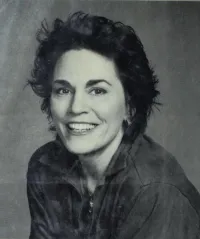
Rita Mae Brown
American · 2 series
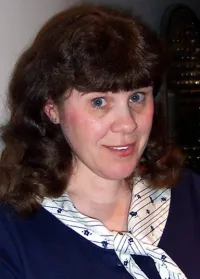
Lorna Barrett
American · 1 series

Jenn McKinlay
American · 3 series

Ellery Adams
American · 4 series
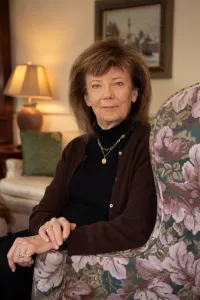
Diane Mott Davidson
American · 1 series
Series
Agatha Raisin
by M.C. Beaton
Amish Candy Shop Mystery
by Amanda Flower
Book Retreat Mystery
by Ellery Adams
Books by the Bay Mystery
by Ellery Adams
Booktown Mystery
by Lorna Barrett
Charmed Pie Shoppe Mystery
by Ellery Adams
Chief Inspector Armand Gamache
by Louise Penny
Cupcake Bakery Mystery
by Jenn McKinlay
Goldy Schulz
by Diane Mott Davidson
Hannah Swensen Mystery
by Joanne Fluke
Hat Shop Mystery
by Jenn McKinlay
Jake Jackson
by Stig Abell
Library Lover's Mystery
by Jenn McKinlay
Marlow Murder Club
by Robert Thorogood
Miss Marple
by Agatha Christie
Mrs. Murphy
by Rita Mae Brown
Secret, Book and Scone Society
by Ellery Adams
Sister Jane
by Rita Mae Brown
Sunshine Vicram
by Darynda Jones
The Thursday Murder Club
by Richard Osman