Amateur Sleuth Books and Series
Mysteries featuring everyday people who solve crimes through wit and curiosity rather than professional training.
What is the amateur sleuth?
The amateur sleuth is arguably the founding archetype of cosy crime. The detective is not a police officer, not a private eye — they are a librarian, a retired teacher, a village busybody, a woman who bakes excellent scones and notices too much. What drives them is curiosity rather than obligation. The crime lands in their world uninvited, and instead of stepping back, they step forward. Agatha Christie gave us the template with Miss Marple: apparently unremarkable, quietly devastating. The genre has been perfecting that formula ever since, but the best modern examples do not simply recycle it — they ask what particular expertise, access, or position makes this specific person the right one to solve this specific crime.
What makes a great amateur sleuth mystery?
The sleuth needs a reason to investigate that feels earned, not contrived. Readers will forgive a lot, but not a protagonist who inserts themselves into a murder for no good reason while professionals are already on the case. The best stories give the amateur access or insight that the police genuinely lack — local knowledge, personal relationships, the ability to get people talking over a cup of tea. The sleuth should also be fallible. Getting things wrong, misreading people, following the wrong thread for two chapters — that is what makes the eventual solution satisfying. The amateur’s limitation is also their strength: without institutional authority, they have to rely on being liked, trusted, or underestimated.
Best amateur sleuth series to start with
The Thursday Murder Club by Richard Osman is the obvious starting point for modern readers. Four residents of a retirement village meet weekly to review unsolved cold cases — and then a real murder lands on their doorstep. Osman earns his amateur credentials properly: his sleuths have age, time, and decades of accumulated expertise on their side. They are not hobbyists playing detective. They are formidable.
The Marlow Murder Club by Robert Thorogood takes the same logic in a sharper direction — three women with no obvious reason to work together, united by a murder in their Thames-side town. Judith Potts, the crossword- setting septuagenarian at its centre, is a particularly fine example of the amateur who is dismissed by authority and vindicated by result.
For something with more grit underneath the charm, Sunshine Vicram by Darynda Jones follows a sheriff who blurs the professional line in entertaining ways — part amateur instinct, part small- town authority. The voice is sharp and the mysteries are genuinely twisty.
History of the amateur sleuth in cosy crime
The amateur sleuth dominated Golden Age detective fiction. Christie, Dorothy L. Sayers, Ngaio Marsh — all built careers around investigators with no institutional badge. The form dipped when procedural realism came into fashion, but cosy crime never abandoned it. MC Beaton’s Hamish Macbeth and Agatha Raisin kept the amateur spirit alive through the 1980s and 90s. Today the trope is more popular than ever, partly because readers trust an ordinary person’s perspective more than an official one. The amateur sees what institutions overlook. And in an era of declining trust in authority, there is something appealing about a detective who derives their legitimacy purely from being right.
Authors

Richard Osman
British · 2 series

Janice Hallett
British

Amanda Flower
American · 1 series

M.C. Beaton
British · 1 series

Alexander McCall Smith
British-Zimbabwean · 1 series
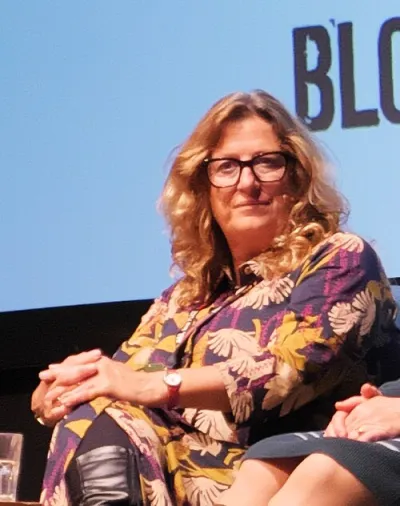
Elly Griffiths
British · 1 series

Alan Bradley
Canadian · 1 series

Anthony Horowitz
British · 1 series

Robert Thorogood
British · 1 series

Joanne Fluke
American · 1 series
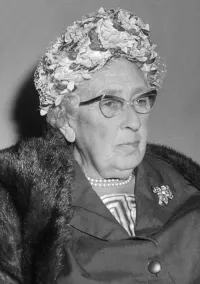
Agatha Christie
British · 5 series
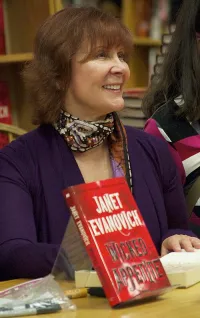
Janet Evanovich
American · 3 series

Rhys Bowen
British-American · 3 series
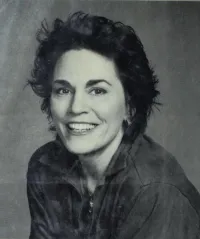
Rita Mae Brown
American · 2 series
Lorna Barrett
American · 1 series

Cleo Coyle
American · 2 series

Jenn McKinlay
American · 3 series

Ellery Adams
American · 4 series
Diane Mott Davidson
American · 1 series
Series
Agatha Christie Standalones
by Agatha Christie
Agatha Raisin
by M.C. Beaton
Amish Candy Shop Mystery
by Amanda Flower
Book Retreat Mystery
by Ellery Adams
Books by the Bay Mystery
by Ellery Adams
Booktown Mystery
by Lorna Barrett
Charmed Pie Shoppe Mystery
by Ellery Adams
Coffeehouse Mystery
by Cleo Coyle
Constable Evans
by Rhys Bowen
Cupcake Bakery Mystery
by Jenn McKinlay
Flavia de Luce
by Alan Bradley
Goldy Schulz
by Diane Mott Davidson
Hannah Swensen Mystery
by Joanne Fluke
Hat Shop Mystery
by Jenn McKinlay
Haunted Bookshop Mystery
by Cleo Coyle
Hawthorne & Horowitz
by Anthony Horowitz
Her Royal Spyness
by Rhys Bowen
Hercule Poirot
by Agatha Christie
Library Lover's Mystery
by Jenn McKinlay
Marlow Murder Club
by Robert Thorogood
Miss Marple
by Agatha Christie
Molly Murphy
by Rhys Bowen
Mrs. Murphy
by Rita Mae Brown
No. 1 Ladies' Detective Agency
by Alexander McCall Smith
Ruth Galloway
by Elly Griffiths
Secret, Book and Scone Society
by Ellery Adams
Sister Jane
by Rita Mae Brown
Stephanie Plum
by Janet Evanovich
The Thursday Murder Club
by Richard Osman
Tommy and Tuppence
by Agatha Christie
We Solve Murders
by Richard Osman