Superintendent Battle
Superintendent Battle of Scotland Yard is a stolid, unflappable detective whose wooden expression conceals a sharp mind. His four novels mix country house murder with political intrigue, and his quiet competence makes him one of Christie's most underrated creations.
By Agatha Christie · 4 books · 1925–present
What is the Superintendent Battle series about?
Superintendent Battle is Agatha Christie’s Scotland Yard detective — a solid, professional policeman whose face reveals nothing and whose mind misses nothing. He appears in four novels that sit somewhere between Christie’s pure whodunits and her adventure thrillers. What makes Battle remarkable is precisely his lack of theatrics. Where Poirot performs brilliance and Marple disarms people with apparent vagueness, Battle simply watches and waits. He is described repeatedly as looking like a rock, or a tree — something unmovable and ancient. That quality is not a limitation; it is his method.
The first two books, The Secret of Chimneys and The Seven Dials Mystery, are lighter and more comedic, packed with political intrigue and country house shenanigans. They read like sophisticated entertainments — breezy, witty, and undemanding. Young aristocrats bumble about, secret societies turn out to be less sinister than advertised, and the European political map is treated as a kind of comic stage set. Battle is almost a supporting character in these, a steady official presence amid cheerful chaos.
The later two novels are a different matter entirely. Murder Is Easy is a pitch-dark portrait of a respectable English village that has been quietly committing serial murder for years, and the horror of it builds slowly and effectively. Towards Zero is arguably Christie’s most structurally ambitious novel — she announces at the outset that the murder is the end point, not the beginning, and the whole book is about the long chain of events and resentments that made it inevitable. Battle appears here as the still centre of a storm of human passion and calculation.
Battle also appears in Cards on the Table alongside Poirot, though that novel is catalogued under the Poirot series. He is one of Christie’s most underrated characters — quiet, competent, and genuinely good at his job in a way that owes nothing to genius or eccentricity.
Should I read Superintendent Battle in order?
The Secret of Chimneys and The Seven Dials Mystery share characters and a setting, so read those two in order. Murder Is Easy and Towards Zero are essentially standalone. Publication order works best for the full experience, but you could legitimately start with Towards Zero if you want Christie’s plotting at its sharpest and are not especially invested in the lighter country-house capers. Just know that you would be starting at the peak and working back toward lighter material.
Who will enjoy the Superintendent Battle series?
Readers who want Christie beyond the big two detectives. If you have read all the Poirot and Marple novels and want more, Battle is the logical next step — and a genuinely rewarding one, not a consolation prize. Fans of The Marlow Murder Club will enjoy the ensemble-cast energy of the earlier books. These are shorter, breezier reads than the main series, but Towards Zero is as good as anything Christie ever wrote and belongs in any honest ranking of her best work. Do not skip it because Battle is the detective: the novel would be remarkable under any name.
Publication Order
- 1
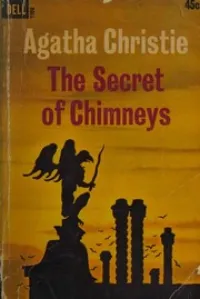 The Secret of Chimneys (1925)
A dead body at a grand country house, a missing diamond, and the political future of a Balkan kingdom all collide in a comic thriller.
- 2
 The Seven Dials Mystery (1929)
A practical joke with alarm clocks goes fatally wrong, and an adventurous young woman investigates a secret society called the Seven Dials.
- 3
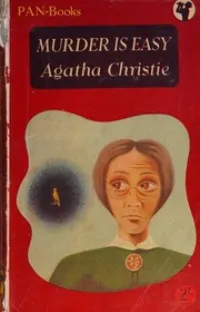 Murder Is Easy (1939)
An old woman on a train tells a fellow passenger that a series of village deaths are murders, then is herself killed before she can report it to Scotland Yard.
- 4
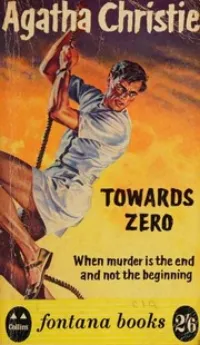 Towards Zero (1944)
A murder at a seaside house party was planned long before the guests arrived, and Battle must work backwards from the crime to find its true starting point.
Related Series
- Hercule Poirot — Battle appears alongside Poirot in Cards on the Table
- Miss Marple — Christie's village mystery tradition
- Marlow Murder Club — Modern British whodunits with ensemble casts