Miss Marple
Miss Jane Marple, an elderly spinster in the village of St Mary Mead, solves murders by drawing parallels between criminal behaviour and the ordinary wickedness she has observed in village life. Her gentle manner conceals one of the sharpest minds in detective fiction.
By Agatha Christie · 12 books · 1930–present
What is the Miss Marple series about?
Miss Jane Marple is an elderly, unmarried woman who lives in the village of St Mary Mead and solves murders that baffle the police. Her method is simple and devastating: she has spent decades observing human nature in a small village, and she knows that the same patterns of greed, jealousy, and cruelty repeat everywhere. A poisoner in London reminds her of the woman who ran the village shop. A blackmailer behaves exactly like the churchwarden’s wife. To Marple, the whole of human wickedness is already catalogued in the parish register.
Agatha Christie wrote twelve Marple novels across nearly fifty years, and the series is the purest expression of the cosy mystery form — murders happen in vicarages, hotels, and country houses, the suspects are all respectable people, and the detective is the last person anyone would suspect of brilliance. She knits. She gardens. She looks like somebody’s maiden aunt. And she is quietly, relentlessly ruthless in her understanding of what people are capable of doing to each other.
Christie based Marple partly on her own grandmother and the grandmother’s friends — women who always expected the worst of everyone and were usually right. That genealogy shows. Marple is never naive, never shocked, and never wrong for long. The police underestimate her in every single book, and the reader knows from the first page that this is a mistake.
Should I read the Miss Marple series in order?
The novels are largely independent, so you can start almost anywhere. My recommendation is A Murder Is Announced — it is the tightest, cleverest Marple novel and needs no prior knowledge. The setup is irresistible: a newspaper advertisement announces that a murder will take place at a specific address on Friday evening, and the whole village turns up to watch.
The Murder at the Vicarage introduces St Mary Mead and is a fine starting point if you prefer publication order. 4.50 from Paddington has one of Christie’s best opening scenes. Sleeping Murder was written early but published posthumously as the final Marple novel, so save it for last. The internal chronology is loose — Marple ages gently across the books, the village modernises around her, but there are no major ongoing storylines to track.
Who will enjoy the Miss Marple series?
Readers who love village mysteries and the idea that evil lurks beneath respectable surfaces. If you enjoy Agatha Raisin for the village setting or Ruth Galloway for a strong female lead in British crime fiction, Marple is the grandmother of the tradition — literally and figuratively. These are short, elegant novels that reward readers who pay attention to character rather than forensics.
There is also something quietly radical about Marple. She is old, she is female, she is dismissed by nearly everyone she meets — and she is always the smartest person in the room. Christie never makes a speech about it. She just lets Marple solve the case while the men stand around looking baffled. That understated subversion is part of the pleasure.
Publication Order
- 1
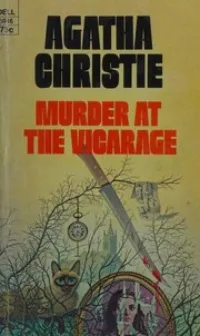 The Murder at the Vicarage (1930)
The least popular man in St Mary Mead is found shot dead in the vicar's study, and Miss Marple quietly outpaces the official investigation.
- 2
 The Body in the Library (1942)
A strangled blonde in evening dress is found in the library of a respectable couple, and Miss Marple sees the pattern before anyone else.
- 3
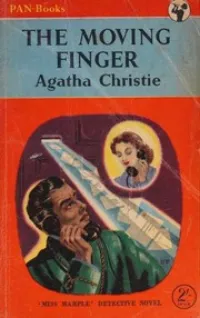 The Moving Finger (1943)
Poison pen letters terrorize a quiet village, and when the campaign ends in death, the narrator calls in Miss Marple to find the truth.
- 4
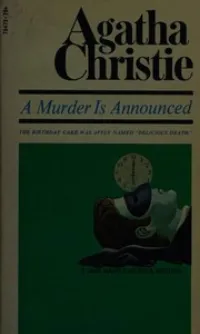 A Murder Is Announced (1950)
A newspaper advertisement announces that a murder will take place at a specific address on Friday evening — and it does.
- 5
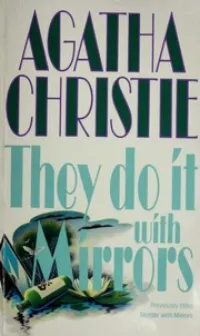 They Do It with Mirrors (1952)
Miss Marple visits a friend living in a house converted into a rehabilitation centre for young offenders, where a shooting is not what it appears.
- 6
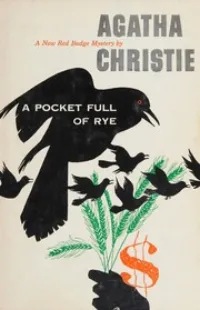 A Pocket Full of Rye (1953)
A financier is poisoned with taxine and found with rye grain in his pocket, and the nursery rhyme pattern continues with two more deaths.
- 7
 4.50 from Paddington (1957)
Miss Marple's friend witnesses a strangling on a passing train, but no body is found — until Marple deduces where it must have been thrown.
- 8
 The Mirror Crack'd from Side to Side (1962)
A famous actress moves to St Mary Mead and a local woman drops dead at her welcome party, poisoned by a cocktail meant for someone else.
- 9
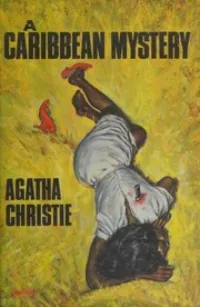 A Caribbean Mystery (1964)
On holiday in the West Indies, Miss Marple meets a bore who claims to have a photograph of a murderer — and is found dead the next morning.
- 10
 At Bertram's Hotel (1965)
A London hotel preserves Edwardian charm so perfectly that Miss Marple suspects the whole establishment is a facade for something criminal.
- 11
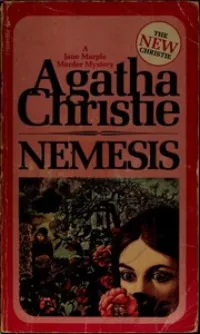 Nemesis (1971)
A dead man's letter asks Miss Marple to investigate a crime — but does not say what the crime is or who committed it.
- 12
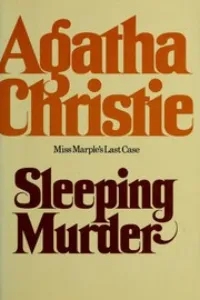 Sleeping Murder (1976)
A young bride's new house triggers buried childhood memories of witnessing a murder, and Miss Marple helps her uncover the truth.
Related Series
- Hercule Poirot — Christie's other iconic detective series
- Agatha Raisin — Village-based cosy crime with a sharp protagonist
- Ruth Galloway — Character-driven British mystery series