Malabar House
Set in 1949 Bombay, Inspector Persis Wadia is India's first female police detective, stationed at the backwater Malabar House precinct. Navigating a newly independent nation's politics and prejudices, she takes on cases that no one else wants — and uncovers truths that powerful people would rather keep buried.
By Vaseem Khan · 5 books · 2020–present
What is the Malabar House series about?
It is New Year’s Eve 1949. India has been independent for two years. Persis Wadia has just become the country’s first female police detective, assigned to Malabar House — a backwater precinct in Bombay, a place for officers no one knows what to do with. Vaseem Khan sets his series at one of history’s great hinge points: a new nation still sorting out what it is, whose old hierarchies of class, caste, religion, and gender haven’t disappeared just because the empire has gone. Persis navigates all of that while investigating murders that the Bombay establishment would prefer to stay unsolved. The city itself — chaotic, layered, beautiful — is as much a character as any of the people in it.
Persis is a quietly remarkable creation. She is stubborn, bookish, and absolutely unwilling to accept the limits her colleagues assume she has. Her father — an enlightened Parsi bookseller — raised her to believe her mind was as good as any man’s. The reality of 1950s Bombay policing tests that belief constantly. What distinguishes the series is that it never lets Persis be purely triumphant or purely beaten: she wins cases and loses standing, makes allies and enemies, and carries the weight of being first at something that shouldn’t have required a pioneer at all.
Should I read the Malabar House series in order?
Yes. The series has a continuous arc — Persis’s standing in the police force, her relationships, and the political context of post-Independence India all develop as the books progress. The mysteries themselves are self-contained enough that you could start mid-series without being confused by the plot, but you’d lose the texture of watching Persis establish herself in an institution that did not expect her and did not want her. Midnight at Malabar House is the correct starting point and one of the strongest debuts in recent historical crime fiction.
The historical backdrop shifts meaningfully across the series too. Each book finds India at a different point in its post-Independence development, so the political context is not static — it deepens and complicates as Persis’s career does.
Who will enjoy the Malabar House series?
Readers who want historical crime fiction with genuine intellectual substance and a setting well outside the usual British or American defaults. If you love Maisie Dobbs for its pioneering female detective in a historically charged environment, or Chief Inspector Gamache for its atmospheric literary quality, Malabar House delivers both, with a setting most Western crime fiction completely ignores. Khan’s research is thorough without being heavy, and Persis is a protagonist worth following.
Readers with an interest in Indian history will find particular richness here — the partition’s aftermath, the question of which colonial structures survived independence, the tension between tradition and modernity in a city remaking itself. Khan doesn’t treat the history as decoration. It is the point.
What makes the Malabar House series worth reading?
The setting is irreplaceable. 1950s Bombay — its smells, its crowds, its contradictions of old and new — comes alive in Khan’s hands. More than that, the series asks serious questions about who gets to administer justice, and who gets excluded from it, in a society still learning to define itself.
At its best, the series makes you feel the specific texture of that historical moment — the hope and the fracture lines both — in a way that a straightforward history never quite manages. Persis is the right lens for it: sharp enough to see everything, positioned awkwardly enough to question all of it.
Publication Order
- 1
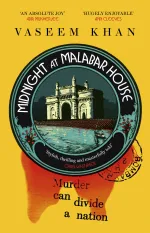 Midnight at Malabar House (2020)
On New Year's Eve 1949, India's first female detective investigates the murder of a prominent British diplomat in a case that crosses cultural and political lines.
- 2
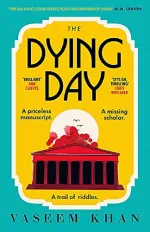 The Dying Day (2021)
A priceless six-hundred-year-old manuscript vanishes from the Bombay Asiatic Society, and its guardian is found dead in a locked room.
- 3
 The Lost Man of Bombay (2022)
A skeleton discovered inside a construction site wall leads Persis into a web of wartime secrets and corporate corruption.
- 4
 Death of a Lesser God (2023)
A condemned man's last words send Persis investigating a decade-old murder that exposes the fault lines between India's religious communities.
- 5
 City of Destruction (2024)
Persis Wadia confronts a case that threatens to shake the foundations of Bombay's political establishment as India's democracy faces its greatest test.
Related Series
- Maisie Dobbs — Historical mystery with a pioneering female detective
- Chief Inspector Armand Gamache — Atmospheric, literary crime fiction