Lord Peter Wimsey
By Dorothy L. Sayers · 15 books · 1923–2013
What is the Lord Peter Wimsey series?
Lord Peter Wimsey arrives in the 1920s as a type: the monocled, jazz-age aristocrat who solves crimes for amusement. He collects incunabula, drinks vintage port, plays the piano, and makes terrible puns. His valet Bunter is impeccable. His flat in Piccadilly is exquisite. You could mistake him for a joke — and nearly everyone in the books does, which is how he gets away with it.
He is not a joke. Beneath the affected silliness is a man genuinely damaged by the First World War — shell-shocked, haunted by the men whose executions he witnessed, using the performance of frivolity as armour against a world that has shown him exactly what it is capable of. Dorothy L. Sayers takes her time revealing this, but the depth is there from the first novel if you know where to look. Wimsey’s nervous breakdowns are not melodrama. They are earned.
The early novels are first-rate puzzle mysteries. Sayers constructs her plots with real rigour — no cheating, no sudden revelations pulled from nowhere. Murder Must Advertise draws brilliantly on her own experience in the advertising industry. The Nine Tailors uses the arcane world of English bell-ringing to build one of the genre’s most extraordinary murder mechanisms. But the series becomes something rarer and more ambitious when Harriet Vane appears in Strong Poison (1930). The romance that develops across four novels — two damaged, brilliant people refusing to compromise themselves for the sake of love — is genuinely extraordinary, and has no real parallel in detective fiction.
Gaudy Night (1935) is the summit: set almost entirely in Oxford, more novel than mystery, a serious examination of women’s intellectual life and the cost of integrity. It is one of the finest books the genre has produced. Read it for the mystery if you like, but stay for the argument about whether a woman can have both love and work without surrendering either.
Jill Paton Walsh continued the series after Sayers’s death with four novels (1998-2013). They are faithful and accomplished, if not quite the real thing.
Do you need to read Lord Peter Wimsey in order?
The early books are largely self-contained. Whose Body? through The Five Red Herrings can be read in almost any order without much confusion — they share a detective and a world, but not a continuous plot. Whose Body? is worth reading first simply because it establishes Wimsey, Bunter, and the tone of the series efficiently.
The Harriet Vane arc is different. These four books form a single, continuous emotional story:
- Strong Poison (1930)
- Have His Carcase (1932)
- Gaudy Night (1935)
- Busman’s Honeymoon (1937)
Read them in order. Gaudy Night in particular depends on everything that came before — its resolution only lands if you have lived through the prior books with Peter and Harriet. Jumping in cold would be like reading the final chapter of a novel first. The wait is worth it.
For Jill Paton Walsh’s four continuations, read them after Busman’s Honeymoon, in publication order.
Who will enjoy Lord Peter Wimsey?
Readers who come to Wimsey from Agatha Christie will find a familiar Golden Age world — country houses, limited suspects, fair-play detection — but a different emotional register entirely. Sayers is wordier, more literary, and more interested in her characters as people than Christie typically allowed herself to be. Her prose is denser and rewards patience. Where Christie gives you a perfect mechanism, Sayers gives you a world.
If you want your mysteries with genuine wit (not just clever plotting), with romance that earns its resolution over four novels, and with a detective who grows and changes across fifteen books, Wimsey is your series. The Nine Tailors alone — for its setting, its atmosphere, its extraordinary central mechanism — is worth the price of admission. Gaudy Night is the reason Sayers still matters.
Publication Order
- 1
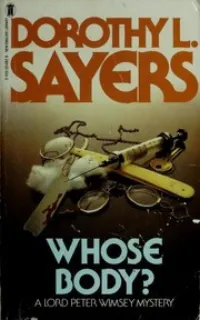 Whose Body? (1923)
A naked body in a bathtub and a missing financier. Lord Peter's first case establishes his method: charm first, deduce second.
- 2
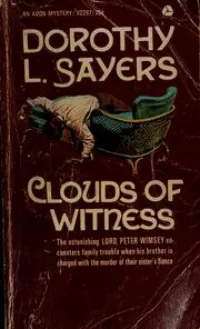 Clouds of Witness (1926)
Peter's brother stands accused of murder. Family loyalty collides with the truth, and Peter must dig up secrets no aristocrat would want aired.
- 3
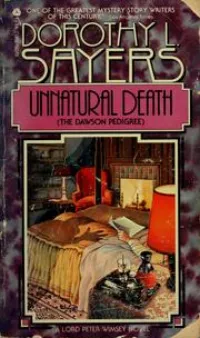 Unnatural Death (1927)
An elderly woman dies and her doctor suspects something wrong, but there's no obvious method. Peter uncovers a killer of chilling patience.
- 4
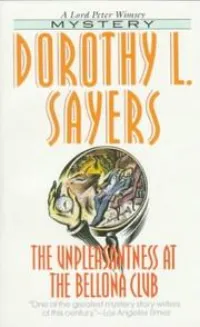 The Unpleasantness at the Bellona Club (1928)
An old colonel is found dead in his armchair at his gentlemen's club. The question isn't just who killed him — it's who died first.
- 5
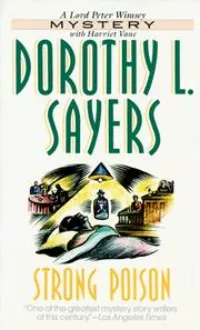 Strong Poison (1930)
Crime novelist Harriet Vane is on trial for poisoning her lover. Peter believes she's innocent — and finds himself inconveniently in love.
- 6
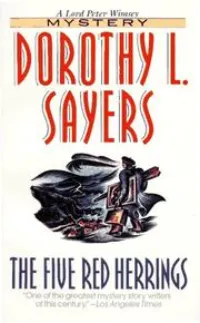 The Five Red Herrings (1931)
An artist is found dead in a Scottish valley, and six painters had both motive and opportunity. A meticulous puzzle driven by railway timetables.
- 7
 Have His Carcase (1932)
Harriet stumbles across a freshly murdered body on a beach. She and Peter investigate together — awkwardly, brilliantly, and not yet in love.
- 8
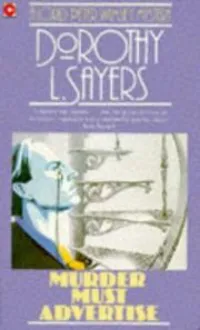 Murder Must Advertise (1933)
Peter goes undercover at an advertising agency where a copywriter fell down a staircase. Sayers skewers the industry she once worked in.
- 9
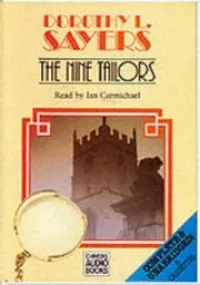 The Nine Tailors (1934)
A stranded Peter takes shelter in a Fenland village where the church bells ring for hours — and a body is found in someone else's grave.
- 10
 Gaudy Night (1935)
Harriet returns to her Oxford college to investigate a poison-pen campaign. The series' masterpiece: a novel about intellect, independence, and love.
- 11
 Busman's Honeymoon (1937)
Peter and Harriet's honeymoon is interrupted by a corpse in the cellar. The detective story Sayers called 'a love story with detective interruptions.'
- 12
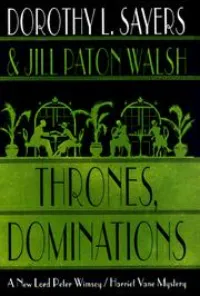 Thrones, Dominations (1998)
Completed by Jill Paton Walsh from Sayers's own notes. Peter and Harriet adjust to married life while a disturbing parallel case unfolds.
- 13
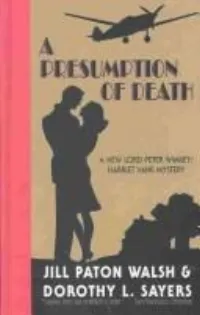 A Presumption of Death (2002)
Jill Paton Walsh continues the story into wartime Britain. Harriet investigates a murder on the home front while Peter is abroad on secret work.
- 14
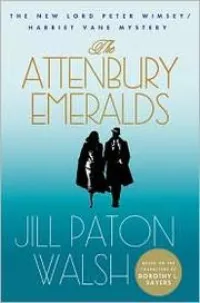 The Attenbury Emeralds (2010)
Peter revisits his very first case — a stolen emerald before the events of Whose Body? — when it resurfaces decades later with new complications.
- 15
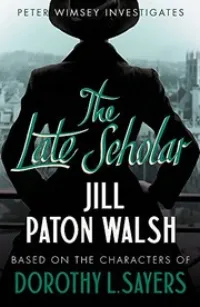 The Late Scholar (2013)
Peter is summoned to Oxford as Duke of Denver when a bitter college dispute turns deadly. Walsh's final instalment honours the series warmly.