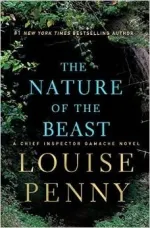
The Nature of the Beast
by Louise Penny
A young boy who cried wolf is found dead near a massive hidden weapon in the forest, and Gamache must separate the child's fantasies from reality.
Review
This eleventh installment opens with a death that hits the village of Three Pines harder than most. Nine-year-old Laurent Lepage was known for his wild stories — aliens, monsters, giant guns hidden in the forest. When he is killed in what appears to be a hit-and-run, the village mourns a child they loved even as they dismissed his tales. Then one of his stories turns out to be true.
The discovery of a massive missile launcher concealed in the woods near Three Pines takes the novel into unexpected territory. Penny blends her cosy village mystery with elements of international espionage and Cold War history, and the combination works far better than it should. The weapon’s presence raises questions about what else might be hidden in the Quebec countryside and who has been keeping secrets for decades.
The death of a child gives the story an emotional weight that Penny handles with great care. She does not exploit Laurent’s death for shock value but instead uses it to explore how a community grieves, how guilt compounds sorrow, and how the adults who ignored a boy’s warnings must live with that failure.
Gamache is pulled back into active investigation by the scale of the threat. His retirement is effectively over, and watching him reengage with police work reveals how much the role is part of his identity. He approaches the case with his usual patience, but there is an urgency here driven by the weapon’s terrifying potential.
The supporting cast is strong as always. Clara, Reine- Marie, Ruth, and the rest of Three Pines are given real emotional work to do, and Penny distributes the story’s weight generously among them. Ruth and her duck Rosa provide moments of dark humour that leaven the grimmer aspects of the plot.
The historical elements involving the weapon’s origins are genuinely interesting. Penny has clearly done her research, and she integrates it into the narrative without ever letting exposition overwhelm the human story at the novel’s centre.
A bold and emotionally resonant entry that pushes the series in new directions while keeping its heart firmly in the village that has always been its greatest creation.