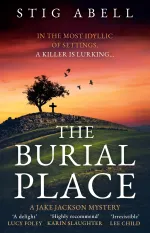
The Burial Place
by Stig Abell
A dark secret beneath the English countryside draws Jake into his most dangerous investigation yet.
Review
The third Jake Jackson novel sees Stig Abell pushing his protagonist into darker territory while maintaining the meditative quality that defines the series. When excavation work near the village uncovers something that should have stayed hidden, Jake is drawn into an investigation that reaches further back in time than any he has faced before.
Abell’s command of landscape has only sharpened. The English countryside here is not merely atmospheric but geological — layers of earth holding layers of history, secrets literally buried beneath the fields that Jake tends. The title is perfectly chosen, carrying both its literal meaning and the weight of everything communities choose to put underground and forget.
Jake himself has evolved across three books in ways that feel organic and earned. He is more rooted now, more connected to the people around him, and this makes the stakes of the investigation feel personal in a way they might not have in the first novel. His willingness to risk his hard-won peace for the sake of truth reveals a man who cannot quite leave the detective behind.
The danger in this instalment feels more immediate than before. Abell raises the tension without abandoning the series’ contemplative pace, a difficult balance that he manages with considerable skill. There are moments of genuine menace woven into the quiet fabric of rural life, and the contrast makes both elements more powerful.
The community of Caelum Parvum continues to reveal new facets. Abell understands that small places hold large histories, and the village’s response to the discovery — the silences, the deflections, the careful alliances — is rendered with anthropological precision. These are people who have lived alongside secrets for so long they have forgotten they are keeping them.
The relationship between Jake and Livia reaches a new depth here. Abell writes their connection with the same patience he brings to everything else — nothing is rushed, nothing is forced, and the emotional payoff is all the greater for it.
Abell’s prose remains a pleasure. He writes with economy and care, every sentence doing work. The literary references continue to enrich the narrative without ever feeling like display. The Burial Place is a series hitting its stride — assured, atmospheric, and deeply humane.