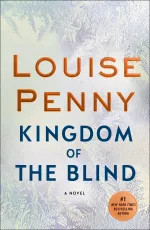
Kingdom of the Blind
by Louise Penny
Gamache is named as an executor of a stranger's will, which contains a bizarre bequest that draws him into a case involving opioid trafficking.
Review
Louise Penny opens her fourteenth Gamache novel with an irresistible hook: a dead woman’s will names three executors, none of whom knew her. Gamache is one of them, and the will itself contains provisions so strange they border on the absurd. It’s the kind of premise that makes you cancel your evening plans.
The mystery of the will drives the plot forward with genuine momentum. Who was this woman, and why did she choose these particular strangers to handle her estate? Penny parcels out answers with expert timing, each revelation shifting the ground beneath the reader’s feet in unexpected ways.
Running parallel to the will mystery is the continuing thread of the opioid crisis that began in Glass Houses. Gamache is dealing with the fallout of his previous decisions, and Penny doesn’t let him off the hook. The consequences are real, professional and personal, and they press down on every scene with increasing weight.
The supporting cast is typically excellent. Jean-Guy Beauvoir continues to grow as a character, his relationship with Gamache deepening in ways that feel earned rather than manufactured. And the Three Pines regulars provide their usual blend of warmth, wit, and occasionally startling insight.
Penny’s treatment of the opioid epidemic remains one of the most sensitive in contemporary fiction. She understands that addiction doesn’t discriminate and that the systems meant to help can sometimes make things worse. There’s a quiet fury beneath the prose that gives the book unexpected moral force.
The Quebec winter setting is rendered with Penny’s characteristic precision. Cold seeps through these pages — the kind of cold that shapes lives and decisions, that forces people together and drives them apart in equal measure. The landscape is never mere backdrop but always participant.
What elevates the novel is its exploration of blindness, both literal and metaphorical. Characters refuse to see what’s in front of them, choose comfortable fictions over painful truths. Penny weaves this theme through every storyline with a deftness that only becomes apparent in retrospect.
A worthy continuation that balances the series’ ongoing narrative with a standalone mystery compelling enough to hook newcomers. Penny’s craft continues to deepen, her ambition growing alongside her confidence.