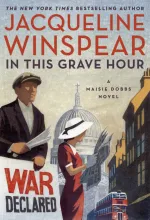
In This Grave Hour
On the day Britain declares war on Germany in 1939, a Belgian refugee is murdered, and Maisie discovers a pattern of killings targeting those who fled the Great War.
Review
The novel opens on September 3, 1939 — the day Britain declares war on Germany — and the gravity of that moment permeates every page that follows. On this very day, a Belgian refugee is found murdered, and Maisie Dobbs is asked to investigate by a representative of the Belgian government in exile. She soon discovers that this killing is not isolated: someone is systematically targeting Belgians who fled to England during the Great War.
Winspear’s choice to set a murder mystery against the declaration of war is inspired. The public dread and private grief that accompany the announcement create an emotional backdrop that elevates even routine investigative scenes. Everyone Maisie encounters is processing the news differently — with fear, resignation, false bravado, or quiet determination — and these varied responses give the novel a rich human texture.
The pattern of killings targeting Belgian refugees connects the two wars in a way that is thematically resonant without being heavy-handed. The refugees carry the trauma of one conflict into the opening of another, and whatever secret they share from the Great War has followed them for over twenty years. Winspear unspools this thread with patience, letting the connections emerge through careful investigation rather than sudden revelation.
Maisie’s return to London and her established routines provides welcome grounding after the upheaval of the previous two novels. She is back at work with Billy, back in familiar streets, and the contrast between domestic normalcy and the extraordinary circumstances of wartime is effectively rendered. The blackout, the gas masks, the evacuation of children — Winspear weaves these details into the narrative with practiced skill.
The Belgian community is drawn with nuance and specificity. These are people who rebuilt their lives in a new country only to face the prospect of displacement again, and their fear is palpable. Winspear treats their experience with the same careful attention she has brought to other marginalized communities throughout the series.
The mystery is well-plotted, with a solution that reaches back into the chaos of wartime Belgium and the moral compromises that survival sometimes demands. The revelation is both surprising and inevitable — the best kind of mystery resolution — and it carries a weight that extends beyond the individual crime.
Maisie herself is more settled in this novel, having come through her period of grief and emerged with a harder-won sense of purpose. Her decision to adopt Anna, introduced in earlier books, adds a new dimension to her character, and Winspear handles the anxieties of wartime parenthood with sensitivity and warmth.
This is Winspear operating at full command of her series, balancing historical sweep with intimate character work. The grave hour of the title refers not only to the declaration of war but to the moral reckonings that war demands of everyone it touches.