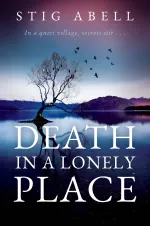
Death in a Lonely Place
by Stig Abell
Jake Jackson's quiet rural life is disrupted again when a body is discovered in circumstances that suggest the past is never truly buried.
Review
Stig Abell’s second Jake Jackson novel deepens everything that made the debut so compelling. Jake has settled further into his life on the smallholding, finding rhythm in the land and the seasons. But rural peace is fragile, and when a body turns up in circumstances that echo old wounds, Jake cannot look away.
The sense of place remains Abell’s greatest strength. The English countryside in winter — bare hedgerows, frozen mud, low grey skies — becomes a character in its own right. Abell captures the particular loneliness of remote places, where beauty and desolation exist in the same breath. Every description feels earned, never decorative.
Jake continues to be a protagonist worth spending time with. He is older, wearier, and more comfortable in his solitude than most fictional detectives. His relationship with books and cooking gives the novel a domestic texture that grounds even the darkest passages. He thinks before he acts, and Abell trusts the reader to appreciate that restraint.
The mystery in this instalment carries more personal weight. The circumstances of the death connect to histories that Jake and the village would rather forget. Abell handles the theme of buried pasts with subtlety — the investigation becomes as much about what people choose to remember as what actually happened.
The supporting cast has grown richer since the first book. Livia remains a warm and complex presence, and the villagers feel like people with lives beyond the page. Abell resists the temptation to turn anyone into a simple suspect or a simple ally. Loyalties are complicated, and silence speaks as loudly as confession.
The pacing is deliberate without ever dragging. Abell lets scenes breathe, allowing tension to build through conversation and observation rather than set pieces. The quieter moments — Jake reading by the fire, a shared meal, a walk across frozen fields — are as essential to the book’s effect as any revelation.
Abell’s prose remains clean and measured, with flashes of lyrical precision that catch you off guard. He has a gift for the telling detail, the single image that illuminates a character or a mood. There is a confidence here that comes from knowing exactly what kind of book he is writing.
The resolution is emotionally satisfying and thematically coherent. Abell understands that the best mysteries are not about who did it but about what the doing reveals. Death in a Lonely Place confirms that Jake Jackson is one of the finest additions to modern crime fiction.