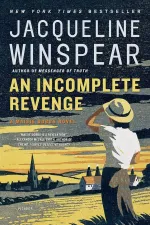
An Incomplete Revenge
Strange fires and acts of vandalism in a Kent hop-picking village lead Maisie to uncover a community's deeply buried wartime guilt.
Review
Jacqueline Winspear takes Maisie Dobbs out of London and into the hop fields of Kent for an investigation that peels back the bucolic surface of English village life. Strange fires, petty vandalism, and an atmosphere of collective unease suggest something far darker than rural mischief, and Maisie is hired to find out what lies beneath the silence.
The setting is one of Winspear’s finest achievements in the series. The annual hop-picking season brings together Londoners and locals in a temporary community, and Winspear uses this collision of classes and cultures to explore tensions that have little to do with the harvest. The landscape itself becomes a character — golden fields and orchards concealing old wounds that the village would rather forget.
At the heart of the mystery is a wartime event that the community has collectively buried. Winspear handles this revelation with characteristic restraint, letting the truth emerge slowly through conversations, silences, and the details that Maisie notices but others overlook. The guilt is not individual but communal, which gives the book a weight that a simpler whodunit would lack.
Maisie’s investigative methods continue to blend the psychological with the practical. She moves through the village not as an outsider imposing order but as a careful listener, earning trust before pressing for truth. Her empathy remains her sharpest tool, and Winspear writes her interviews with a subtlety that makes each exchange feel like a small, self-contained drama.
The Romani community plays a significant role in the story, and Winspear treats them with dignity and complexity. Their marginalization mirrors the broader themes of scapegoating and displacement that run through the novel, connecting the village’s wartime shame to patterns of prejudice that extend well beyond one incident.
Billy Beale provides his usual grounding presence, and there are moments of genuine warmth between him and Maisie that remind us how far their partnership has come. The supporting cast of villagers is drawn with Winspear’s typical economy — a few sharp details and a line of dialogue are enough to make each one distinct and believable.
The pacing is measured, as is Winspear’s way, building through accumulation rather than sudden revelations. Some readers may find the middle sections slow, but the final chapters deliver an emotional payoff that justifies the careful groundwork. The revenge of the title is incomplete in more ways than one, and the ambiguity of the resolution feels honest rather than evasive.
This is a quieter entry in the series, but its exploration of collective guilt and the long shadow of war is among Winspear’s most thoughtful work. It confirms that the Maisie Dobbs novels are as much about the moral landscape of interwar Britain as they are about solving crimes.