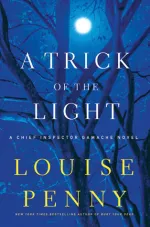
A Trick of the Light
by Louise Penny
An art world rival is found dead at a celebrated painter's exhibition opening in Three Pines, exposing the dark side of creativity and ambition.
Review
Louise Penny turns her attention to the art world in this seventh installment, and the result is a novel that explores creativity, jealousy, and the thin line between ambition and obsession. When a body is found in Clara Morrow’s garden the morning after her triumphant gallery opening, Gamache must navigate a world where beauty and cruelty coexist uncomfortably.
Clara has waited years for recognition as an artist, and her exhibition is a moment of pure triumph. That it is immediately overshadowed by murder gives the story a bittersweet quality that Penny handles with real delicacy. Clara’s joy is complicated but not destroyed, and watching her process both events simultaneously is one of the novel’s quiet pleasures.
The victim, Lillian Dyson, was once Clara’s closest friend before a devastating betrayal ended their relationship. Penny builds out their shared history with care, showing how creative rivalry can curdle into something toxic. The flashbacks to their early friendship are genuinely moving, making the present-day murder feel like a loss beyond the obvious.
The art world setting brings a cast of gallery owners, critics, and fellow artists into the story, each with their own agenda and their own complicated relationship with talent and success. Penny clearly knows this world and writes about it with affection and mild exasperation in equal measure.
There is a secondary thread involving addiction and recovery that runs through the novel. Penny treats it with the same compassion she brings to everything — no judgment, just a clear-eyed look at how people struggle and sometimes fail and sometimes find their way back.
Gamache is in fine form here, his investigation steady and humane as always. His interactions with the art world figures are entertaining, particularly when he encounters people who assume a police officer cannot appreciate beauty or complexity. He disabuses them of this notion quietly and thoroughly.
The Three Pines setting is as vivid as ever, the village in late summer rendered with warmth and sensory detail. Penny makes you feel the heat, smell the gardens, and understand why anyone would want to paint this place. A satisfying mystery wrapped in a thoughtful meditation on what it costs to create.