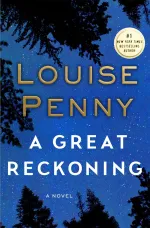
A Great Reckoning
by Louise Penny
Gamache takes over as commander of the Sûreté Academy and discovers a mysterious old map that may be connected to a fresh murder.
Review
Penny reinvents her series once again by placing Gamache in charge of the Surete Academy, the training ground for Quebec’s police force. It is a bold move that puts her detective in an entirely new environment — surrounded by cadets, entrenched corruption, and a mysterious old map that someone is willing to kill to possess.
The academy setting is richly drawn. Penny depicts an institution that has been rotted from within by years of compromised leadership, and Gamache’s mission to reform it gives the novel a scope that extends beyond any single murder. His methods — quiet, principled, maddeningly patient — clash with a culture built on intimidation and shortcuts.
The old map is a wonderfully Penny-esque device. Found tucked inside the walls of the bistro in Three Pines, it depicts the village and its surroundings but with strange differences that suggest hidden meanings. The map becomes a puzzle within a puzzle, drawing connections between the academy, the village, and Quebec’s layered history.
A fresh murder at the academy forces Gamache to investigate while simultaneously trying to root out the corruption that may have enabled it. The dual challenge creates genuine tension, as he cannot be certain which of the people around him are allies and which are part of the problem he was brought in to solve.
The cadets are well-drawn additions to the cast. Penny gives several of them distinct personalities and backstories, and their interactions with Gamache and with each other add energy and unpredictability to the story. Watching Gamache as a teacher and mentor reveals new facets of his character.
Three Pines remains a presence even as the action shifts to the academy. The village and its residents ground the story emotionally, and the connections between the map and the village ensure that Penny’s beloved setting is never far from the centre of things.
The resolution ties together the map, the murder, and the institutional corruption in a way that feels earned rather than forced. Penny demonstrates once again that her ambitions for the series extend well beyond the comfortable boundaries of cosy crime, even as she honours the genre’s fundamental pleasures.