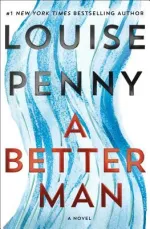
A Better Man
by Louise Penny
During catastrophic spring floods, Gamache searches for a missing woman while trying to mentor a troubled young detective.
Review
Louise Penny’s fifteenth Gamache novel trades the series' signature winter for spring — but this is Quebec spring at its most violent, with catastrophic flooding threatening to swallow villages whole. Against this backdrop of rising waters, a young woman goes missing and her father becomes the obvious suspect.
The missing-person case is deceptively straightforward, which is exactly how Penny likes it. What appears to be a domestic tragedy unfolds into something more layered and surprising, with the floodwaters serving as both literal threat and metaphor for the emotions threatening to overwhelm every character in the book.
Gamache’s mentorship of a difficult young detective adds a compelling dimension to the story. The younger officer is arrogant, dismissive, and determined to undermine Gamache at every turn. Watching Gamache respond with patience and strategic wisdom rather than authority is one of the book’s genuine pleasures.
The flooding gives the novel a ticking-clock urgency that’s unusual for the series. Roads wash out, bridges collapse, and communities are cut off from help. Penny captures the chaos of natural disaster with vivid precision — the exhaustion, the improvisation, the way crisis strips away pretence and reveals character.
Three Pines itself is under threat, and the village rallies in ways that are both heartwarming and entirely believable. Clara, Myrna, Ruth, and the rest don’t become sudden heroes; they simply do what neighbours do, which turns out to be quite a lot when the water is rising.
The title’s aspiration — becoming a better man — runs through every storyline. Gamache is trying to be better, the young detective is fighting against becoming better, and the suspect may or may not have failed catastrophically at being better. Penny handles this theme with her usual light touch, letting it emerge from character rather than imposing it through plot.
The emotional resolution is vintage Penny: surprising in its specifics but inevitable in its logic. She respects her readers enough to let the pieces fall where they must, even when that means sitting with uncomfortable truths about love, rage, and the distance between good intentions and good actions.
A deeply satisfying entry that uses its natural disaster setting to raise the physical stakes while keeping the emotional and moral complexity that defines the series at its best.