What Is Cosy Crime? A Reader's Guide to the Genre
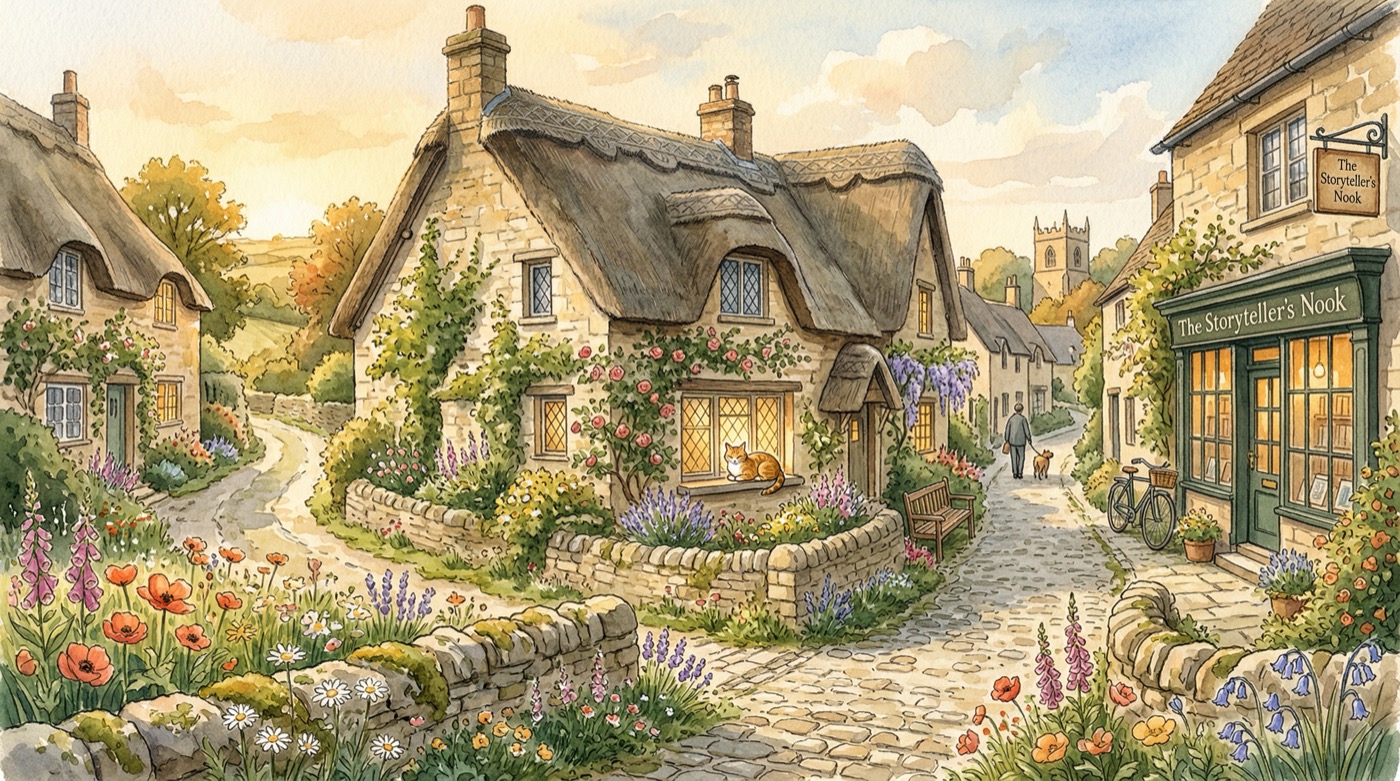
Someone is dead. There will be an investigation. There will be a solution. And somewhere in the middle, someone will make a pot of tea.
That is the basic shape of cosy crime. The body is usually found in the first chapter. The detective is usually an amateur. The tone is warm, often funny, and the violence — if there is any — happens mostly off the page. By the final chapter, order is restored. The village, the bookshop, the retirement community, the small-town police department: whatever world the book has built, it is intact. The murderer is caught. The characters you like are still standing.
If that sounds like a formula, it is. That is not a criticism. Sonnets are a formula too.
What defines a cosy crime novel?
Four things, roughly speaking.
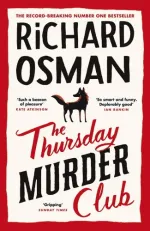
An amateur or unconventional detective. Not a hard-boiled private eye. Not a cynical detective with a drinking problem and three ex-wives. A retired professor, a knitting club, four pensioners who meet on Thursdays to review cold cases. Richard Osman’s Thursday Murder Club is perhaps the purest expression of this in contemporary fiction: four people in their seventies and eighties, living at a retirement village called Coopers Chase, solving crimes the police cannot be bothered with.
A contained, community-based setting. The village is the most traditional version, going back to Agatha Christie’s St Mary Mead. But the principle generalises: an Amish community in Ohio, a small Canadian town in Quebec, a 1950s Bombay police department. What matters is that the setting has texture and continuity. Characters have histories with each other. The bakery, the pub, the market stall — they come back book after book. Amanda Flower builds her Amish Candy Shop series around the community of Harvest, Ohio, and the details of Amish life are as much the point as the murders.
Low levels of graphic violence or explicit content. This is the part that often gets misunderstood. Cosy crime is not sanitised in the sense that it ignores the weight of death. The best cosy crime writers — Penny, Osman, MC Beaton — take death seriously. What they avoid is gore for its own sake, graphic torture, or sexual violence as plot decoration. The genre trusts that a reader can feel the gravity of a murder without being shown the worst of it.
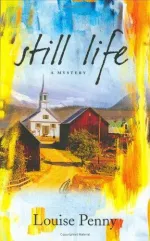
A tone that tends toward warmth and resolution. Not that everything is fine. Louise Penny’s books deal with grief, addiction, and the failures of institutions in ways that are genuinely hard. But the fundamental contract with the reader is that the world is, at bottom, comprehensible. The mystery will be solved. The guilty party will face justice. This is not naive. It is a deliberate choice about what fiction is for.
Where did cosy crime come from?
The genre’s origin story starts in England, roughly the 1920s, and two names dominate it: Agatha Christie and Dorothy L. Sayers. Christie published her first novel, The Mysterious Affair at Styles, in 1920. It introduced Hercule Poirot and established the template: a murder in a country house, a detective with a peculiar method, a cast of suspects with motives. Sayers followed with Lord Peter Wimsey. Both writers understood that the puzzle was the engine but the characters were the fuel.
The period between the wars — sometimes called the Golden Age of detective fiction — produced the conventions the genre still runs on. Country houses, village fetes, locked rooms, village vicars. Christie alone wrote 66 novels and 14 short story collections. When she died in 1976, she was the best-selling fiction writer of all time. She may still be.
The “cosy” label itself came later, partly as a way of distinguishing this tradition from the American hardboiled school — Chandler, Hammett, later Ellroy — which was grittier, more cynical, and more interested in institutional corruption than village intrigue. The two traditions have coexisted since the thirties. They attract different readers for different reasons and occasionally overlap.
MC Beaton’s Hamish Macbeth and Agatha Raisin novels, starting in the 1980s, kept the British cosy tradition alive during a period when literary fashion was not especially kind to it. Beaton was not fashionable. She was read by millions anyway. Alexander McCall Smith’s No. 1 Ladies’ Detective Agency, which began in 1998, expanded the geographic range of the genre considerably. It was set in Botswana and became an international phenomenon.
The contemporary cosy boom — and there is one — really started building around 2015. It has not stopped since.
What is the difference between cosy crime and thrillers?
The clearest way to put it: thrillers run on threat, cosy crime runs on puzzle.
In a thriller, someone is in danger right now. The protagonist may not survive. The tension is propulsive and anxious. Lee Child’s Jack Reacher novels are thrillers. Gillian Flynn’s Gone Girl is a thriller. The machinery of the book is designed to generate dread and keep you turning pages to find out if the worst will happen.
In cosy crime, the worst has already happened. Somebody is dead. The question is not whether there will be more violence but who did it and how the investigator will figure that out. The tone is investigative rather than urgent. You read to find out the answer to a puzzle, and the pleasure is at least partly intellectual.
There are also structural differences. Cosy crime almost always features a series detective — someone who recurs across multiple books in the same setting. Thrillers more often operate as standalone novels, or series where the character moves between very different environments. The cosy reader is often as attached to the setting as to the plot. They want to return to Three Pines, to Coopers Chase, to Harvest, Ohio.
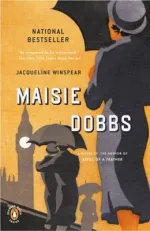
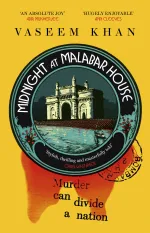
The overlap zone is the “soft-boiled” mystery: books that have more darkness and moral complexity than traditional cosies but less graphic content than thrillers. Jacqueline Winspear’s Maisie Dobbs series sits here. A psychologist and investigator working in 1920s and 30s England, dealing with the long aftermath of the First World War. The books are quiet but not lightweight. Vaseem Khan’s Malabar House series, set in 1950s Bombay, does something similar — period crime fiction with serious historical ambitions.
Who are the most popular cosy crime authors?
Agatha Christie is still the foundation. If you have not read her, start there. And Then There Were None is probably the most structurally perfect mystery novel ever written. The Murder of Roger Ackroyd will make you reconsider everything you think you know about the genre.
In contemporary fiction, Richard Osman is the undeniable commercial phenomenon. The Thursday Murder Club series has sold millions of copies across multiple countries and turned Osman from a television personality into one of the most widely read novelists in Britain.
Louise Penny is the dominant voice in North American cosy crime. Her Chief Inspector Gamache series is now nineteen novels deep, and the later books are as good as the earlier ones — something that almost never happens in any long-running series.
Jacqueline Winspear has built a seventeen-novel series around Maisie Dobbs that earns comparison with Sayers and Christie without imitating either. Vaseem Khan has done something structurally similar for post-Partition India.
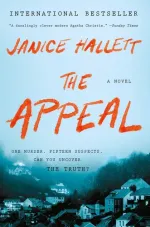
On the quirkier end: Janice Hallett writes mysteries told entirely through emails, texts, and documents — no prose narration whatsoever. The Appeal is a murder mystery set during an amateur theatre production and delivered through the email chains of the people involved. It works considerably better than it should.
What are the best cosy crime series for beginners?
If you are new to the genre, three series will give you the full range of what it can do.
The Thursday Murder Club by Richard Osman is the easiest entry point. The prose is friendly, the characters are immediately likeable, and the humour is consistent. Start with The Thursday Murder Club (2020) and read in publication order. The series gets more emotionally serious as it goes — book four is something else — but the first novel works perfectly well as a standalone if you want to test the water.
Chief Inspector Gamache by Louise Penny is for readers who want more depth. Three Pines is one of the most fully realised fictional settings in contemporary crime fiction, and Gamache himself is a rare thing — a detective with genuine moral intelligence. Start with Still Life (2005). Penny’s books are slower than Osman’s and reward patience.
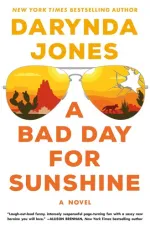
Sunshine Vicram by Darynda Jones is the right choice if you want something with more humour and energy. A sheriff who was left on her parents’ doorstep as a teenager — conceived at a high school party she has no memory of attending — returns to her small New Mexico hometown and immediately starts solving crimes. The tone is comedy-adjacent but the plots hold up.
For historically inclined readers, Maisie Dobbs and Malabar House are both excellent starting points. Both series begin with strong debut novels that establish the world clearly.
Why is cosy crime so popular right now?
Several reasons, and not all of them are about the books.
The obvious one: the world has been fairly relentless for the last ten years, and cosy crime offers a specific kind of reassurance. Not that bad things do not happen — people die in every chapter — but that they can be understood and resolved. The genre’s fundamental promise is that chaos has an explanation and justice is achievable. That is not a small thing to offer a reader in 2026.
The second reason is demographic. The genre has an older readership than most commercial fiction, and that readership has money, leisure time, and brand loyalty. When they find a series they love, they buy every book in hardback on publication day. Publishers have noticed this.
The third reason is the rise of the “cosy crime community” online. BookTok, bookstagram, the dedicated reading forums — cosy crime has an unusually active online audience that creates discovery effects. The Thursday Murder Club became a publishing phenomenon partly through word of mouth amplified by social media. These readers recommend books to each other aggressively.
The fourth reason, which might be the most interesting one: the genre is getting better. The cosy crime being written now is more ambitious than the cosy crime being written twenty years ago. Janice Hallett experiments with form in ways that would not have found a commercial publisher a generation ago. Vaseem Khan uses the framework of genre crime to write about colonialism and independence in ways that are serious and considered. Belinda Bauer pushes the darkness of the form to its edges without losing the essential cosy contract.
The formula has not changed. What has changed is what writers are doing inside it.