
Should You Read Louise Penny's Gamache Series in Order?
Three Pines does not exist on any map. Louise Penny made it up. But readers keep writing to her asking for directions, which tells you something about how real the place feels on the page.
The village in rural Quebec — reachable only if you’re lost, or so the story goes — is home to a bistro, a bookshop, a duck pond, and an unlikely cast of artists, eccentrics, and murder victims. Over nineteen books and two decades, Louise Penny has made it one of the most beloved settings in crime fiction. And Chief Inspector Armand Gamache, the Sûreté du Québec detective who keeps finding himself there, is one of the most fully-realised protagonists the genre has ever produced.
If you’re new to the series and wondering whether you need to start at the beginning, the short answer is yes. The longer answer is below.
Does the Gamache series need to be read in order?
Yes — more strongly than almost any other cosy crime series.
The Chief Inspector Gamache series is not a collection of standalone mysteries that happen to share a detective. It is a single, unfolding story told across nineteen books. Character relationships deepen, fracture, and heal. Gamache himself changes. The village changes. Old wounds reopen. People who seemed peripheral in book two become central by book seven. Reading out of order doesn’t just spoil individual plots — it actively undermines the emotional experience that makes the series special.
Here is what you would lose by skipping around:
Character arcs that span the full series. Inspector Jean-Guy Beauvoir, Gamache’s second-in-command, has one of the most wrenching trajectories in crime fiction. What happens to him between The Cruelest Month and How the Light Gets In — and what it costs Gamache — is the emotional backbone of the first thirteen books. If you pick up How the Light Gets In without having read the books before it, you will feel the plot. You will not feel the weight of it.
Recurring villains and long-running investigations. Penny does not dispatch her antagonists neatly at the end of each novel. Threats accumulate. Enemies bide their time. The conspiracy at the heart of Bury Your Dead reaches forward across multiple books. Glass Houses builds directly on the groundwork laid in A Fatal Grace and The Cruelest Month. These are not Easter eggs for attentive readers — they are load-bearing elements of the plot.
The village itself as a character. Three Pines is not a backdrop. It evolves. The relationships among Gamache, the villagers, and the surrounding landscape accumulate meaning the way real places do — through repetition, through shared history, through the slow accretion of experience. Arriving in Three Pines midway through the series is like joining a dinner party where everyone else has known each other for years. You can follow the conversation. You will miss the subtext.
The emotional payoff. Penny writes toward catharsis. Certain moments in How the Light Gets In or A Better Man land with the force they do because of everything that came before. These are not books you can parachute into and expect full impact.
What is the best book to start with?



Still Life (2005), the first book in the series, is the right place to start — and it remains one of the finest debut crime novels of its era.
It introduces Gamache, Three Pines, and the core supporting cast in a story about the death of an elderly villager found in the woods during hunting season. The mystery itself is satisfying, the setting is immediately atmospheric, and Penny’s voice — humane, unhurried, attentive to the beauty and darkness that coexist in quiet places — is fully formed from page one.
Some readers find Still Life slightly slower than later entries, which is fair. Penny is building something here: laying pipes, establishing rhythms, introducing you to people you will know for a long time. The payoff for that investment comes in the books that follow.
A small but sincere warning: do not start with A Fatal Grace (book two), even though several well-meaning listicles suggest it as a more “exciting” entry point. It references events from Still Life in ways that will either confuse you or spoil the first book. Start at the beginning.
Can you skip any Gamache books?
No — and unlike many series where this is a polite fiction, in the Gamache books it is genuinely true.
Every book in the series advances character relationships and long-running storylines in ways that the next book assumes you know. The Beautiful Mystery (book eight) takes the investigation inside a monastery and feels more self-contained than most; some readers cite it as a possible standalone. It is not. The professional and personal crisis that plays out between Gamache and Beauvoir in that book has consequences that run through the next five years of the series.
The Long Way Home (book ten) and The Nature of the Beast (book eleven) are sometimes described as quieter, transitional entries. They are. They are also doing essential work. Skip them and you will arrive at A Great Reckoning (book twelve) missing context that Penny assumes you have.
The honest answer to “can I skip any?” is this: you can, technically, read any of these books as a one-off mystery and follow the central plot. But the series is not primarily about plot. It is about Gamache, about Three Pines, about the people who live there and the people who pass through. That story only works read in full.
What order does Louise Penny recommend?
Publication order, beginning with Still Life.
Penny has been asked this question many times, and her answer is consistent. She designed the series to be read in the order it was written, and the internal chronology of the books follows publication order closely enough that there is no meaningful difference between reading by publication date and reading by story chronology.
She has also said, in various interviews, that she writes each book with the assumption that some readers are coming to the series for the first time — so she takes care to introduce characters and their histories without alienating newcomers. This is true. But it should not be read as permission to skip the earlier books. The introductions are for people who have wandered in by accident. The full experience is for people who start at the beginning.
How many Gamache books are there?
Nineteen, as of 2024. In publication order:


- Still Life (2005)
- A Fatal Grace (2006)
- The Cruelest Month (2008)
- The Murder Stone (2009)
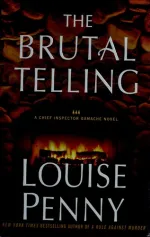
- The Brutal Telling (2009)
- Bury Your Dead (2010)
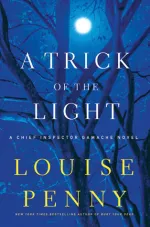
- A Trick of the Light (2011)
- The Beautiful Mystery (2012)
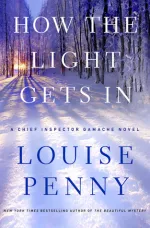
- How the Light Gets In (2013)
- The Long Way Home (2014)
- The Nature of the Beast (2015)
- A Great Reckoning (2016)
- Glass Houses (2017)
- Kingdom of the Blind (2018)
- A Better Man (2019)
- All the Devils Are Here (2020)
- The Madness of Crowds (2021)
- A World of Curiosities (2022)
- The Grey Wolf (2024)




The full annotated list, with summaries and publication details, is on the Chief Inspector Gamache series page.
At nineteen books, this is a substantial commitment. Most readers report that once they arrive in Three Pines, they do not want to leave. The series has a particular quality that is hard to describe without sounding slightly embarrassing: readers become attached to the village and its inhabitants in the way you become attached to places you have actually been. Letters to Louise Penny asking for directions are, in that sense, completely understandable.
Is the Gamache series finished?
No. The series is ongoing, and Louise Penny has indicated she intends to continue writing it.
The Grey Wolf (2024) is the most recent entry as of this writing. Given that Penny has published roughly one book per year since 2005 — with occasional gaps — a twentieth book should be expected, though no title or publication date has been confirmed.
What this means practically: if you start Still Life today and read steadily, you will catch up with living readers and join the community of people who wait for each new book. That community is large, enthusiastic, and has strong opinions about which book is the best in the series. (There is no consensus, which is itself a good sign.)
If you are the kind of reader who prefers to wait until a series is complete before starting, the Gamache books are not the right choice — or rather, nineteen rich novels is enough to be going on with, and the pleasure of each new book as it arrives is part of what readers love about this series.
Start with Still Life. Follow Gamache into the woods. Find your way to Three Pines.
You will not regret it.