Skip to content
Dorothy L. Sayers

Dorothy L. Sayers

British · 1 series

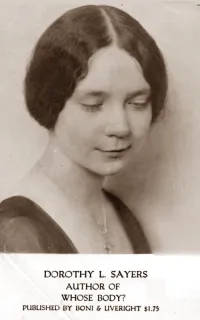
Who is Dorothy L. Sayers?

Dorothy L. Sayers is the Golden Age mystery writer who refused to stay in her lane — and the genre is richer for it.

Alongside Agatha Christie, she defined what British detective fiction could be in the 1920s and 1930s. But where Christie perfected the puzzle, Sayers kept pushing at the form’s edges. Her detective, Lord Peter Wimsey, begins as a stock type: the brilliant, flippant aristocrat who treats crime-solving as a hobby. He’s charming, a little absurd, draped in monocle and fine tailoring. You’d be forgiven for thinking he was just another Bertie Wooster with a magnifying glass.

Then Harriet Vane walks in.

Introduced in Strong Poison (1930), Harriet — a crime novelist accused of poisoning her lover — upends everything. The romance that develops between her and Peter across four novels is one of the most compelling arcs in genre fiction. Sayers wasn’t interested in a detective who simply solves cases; she wanted to write about two intelligent, damaged adults learning to trust each other. Gaudy Night (1935), the peak of the series, is barely a mystery at all — it’s a novel about women’s intellectual independence, disguised as a thriller.

Sayers died in 1957, leaving the series unfinished. Jill Paton Walsh, a distinguished novelist in her own right, continued the series with four books between 1998 and 2013, beginning with Thrones, Dominations (completed from Sayers’s own notes). Walsh’s additions are affectionate and competent; they lack Sayers’s sharpness but honour the characters faithfully.

Sayers also translated Dante’s Divine Comedy and wrote influential theological essays. She took mystery writing seriously as literature — and it shows on every page.

Quick facts

  • Born: 1893, Oxford, England
  • Died: 1957
  • Nationality: British
  • Genre: Detective fiction, Golden Age mystery
  • Best known for: Lord Peter Wimsey series
  • Also known for: Translation of Dante’s Divine Comedy, theological essays
  • Series continued by: Jill Paton Walsh (4 novels, 1998-2013)

What order should I read Dorothy L. Sayers’s books?

Read the Lord Peter Wimsey series in publication order, starting with Whose Body? (1923).

The early novels — Whose Body? through The Five Red Herrings — are classic puzzle mysteries. They’re enjoyable and well- crafted, but they’re primarily about the mechanics of crime. Lord Peter is entertaining company, and the cases are satisfyingly complex, but there’s not yet much at stake emotionally.

That changes with Strong Poison (1930), which introduces Harriet Vane and begins the arc that makes Sayers essential rather than merely excellent. If you’re finding the early books a little dry, Strong Poison is the natural place to feel the series click into something richer.

That said, Strong Poison does work as an entry point if you want to skip ahead. You won’t be lost. But you’ll miss some of Peter’s established character, and the contrast between the lighter early Peter and the more vulnerable Peter who falls for Harriet is part of what makes the romance land.

The Harriet Vane arc — Strong Poison, Have His Carcase, Gaudy Night, Busman’s Honeymoon — must be read in order. These four books form a continuous emotional story. Don’t jump into Gaudy Night cold; you’ll miss everything.

For Jill Paton Walsh’s continuations, read them after Busman’s Honeymoon, in publication order. They’re a separate chapter, but they respect the timeline.

Lord Peter Wimsey

  1. 1
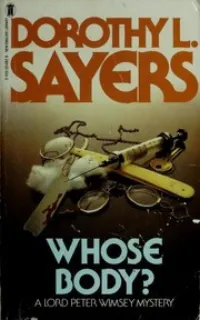
    Whose Body?
    Whose Body? (1923)

    A naked body in a bathtub and a missing financier. Lord Peter's first case establishes his method: charm first, deduce second.

  2. 2
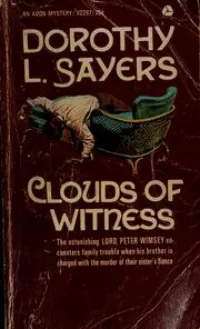
    Clouds of Witness
    Clouds of Witness (1926)

    Peter's brother stands accused of murder. Family loyalty collides with the truth, and Peter must dig up secrets no aristocrat would want aired.

  3. 3
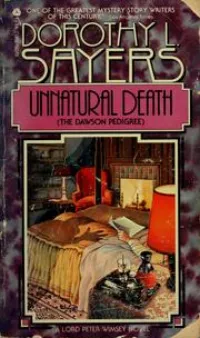
    Unnatural Death
    Unnatural Death (1927)

    An elderly woman dies and her doctor suspects something wrong, but there's no obvious method. Peter uncovers a killer of chilling patience.

  4. 4
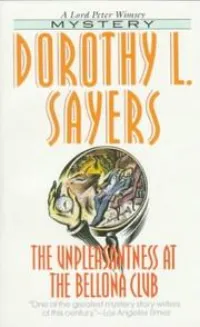
    The Unpleasantness at the Bellona Club
    The Unpleasantness at the Bellona Club (1928)

    An old colonel is found dead in his armchair at his gentlemen's club. The question isn't just who killed him — it's who died first.

  5. 5
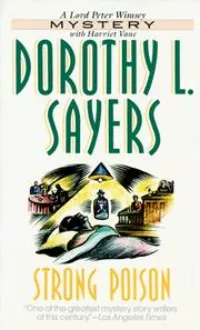
    Strong Poison
    Strong Poison (1930)

    Crime novelist Harriet Vane is on trial for poisoning her lover. Peter believes she's innocent — and finds himself inconveniently in love.

  6. 6
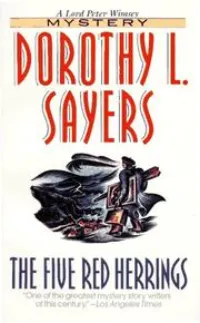
    The Five Red Herrings
    The Five Red Herrings (1931)

    An artist is found dead in a Scottish valley, and six painters had both motive and opportunity. A meticulous puzzle driven by railway timetables.

  7. 7
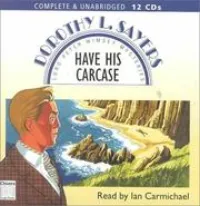
    Have His Carcase
    Have His Carcase (1932)

    Harriet stumbles across a freshly murdered body on a beach. She and Peter investigate together — awkwardly, brilliantly, and not yet in love.

  8. 8
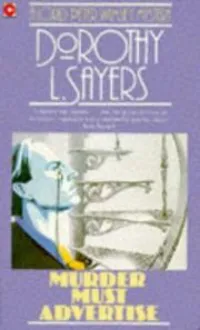
    Murder Must Advertise
    Murder Must Advertise (1933)

    Peter goes undercover at an advertising agency where a copywriter fell down a staircase. Sayers skewers the industry she once worked in.

  9. 9
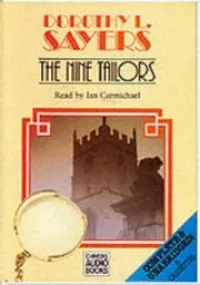
    The Nine Tailors
    The Nine Tailors (1934)

    A stranded Peter takes shelter in a Fenland village where the church bells ring for hours — and a body is found in someone else's grave.

  10. 10
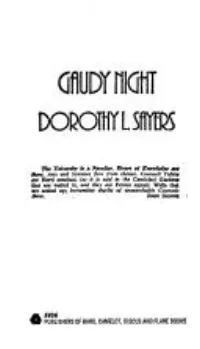
    Gaudy Night
    Gaudy Night (1935)

    Harriet returns to her Oxford college to investigate a poison-pen campaign. The series' masterpiece: a novel about intellect, independence, and love.

  11. 11
    Busman's Honeymoon
    Busman's Honeymoon (1937)

    Peter and Harriet's honeymoon is interrupted by a corpse in the cellar. The detective story Sayers called 'a love story with detective interruptions.'

  12. 12
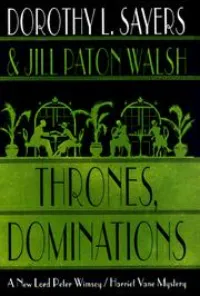
    Thrones, Dominations
    Thrones, Dominations (1998)

    Completed by Jill Paton Walsh from Sayers's own notes. Peter and Harriet adjust to married life while a disturbing parallel case unfolds.

  13. 13
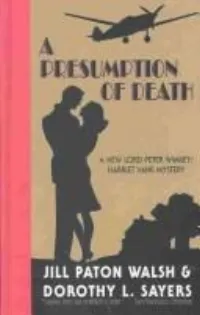
    A Presumption of Death
    A Presumption of Death (2002)

    Jill Paton Walsh continues the story into wartime Britain. Harriet investigates a murder on the home front while Peter is abroad on secret work.

  14. 14
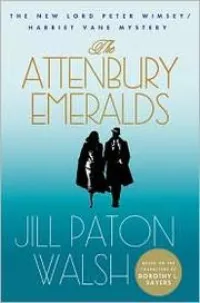
    The Attenbury Emeralds
    The Attenbury Emeralds (2010)

    Peter revisits his very first case — a stolen emerald before the events of Whose Body? — when it resurfaces decades later with new complications.

  15. 15
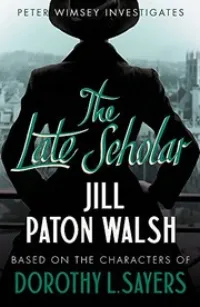
    The Late Scholar
    The Late Scholar (2013)

    Peter is summoned to Oxford as Duke of Denver when a bitter college dispute turns deadly. Walsh's final instalment honours the series warmly.

If you enjoy Dorothy L. Sayers, try...

  • Agatha Christie — Golden Age contemporaries who defined British detective fiction